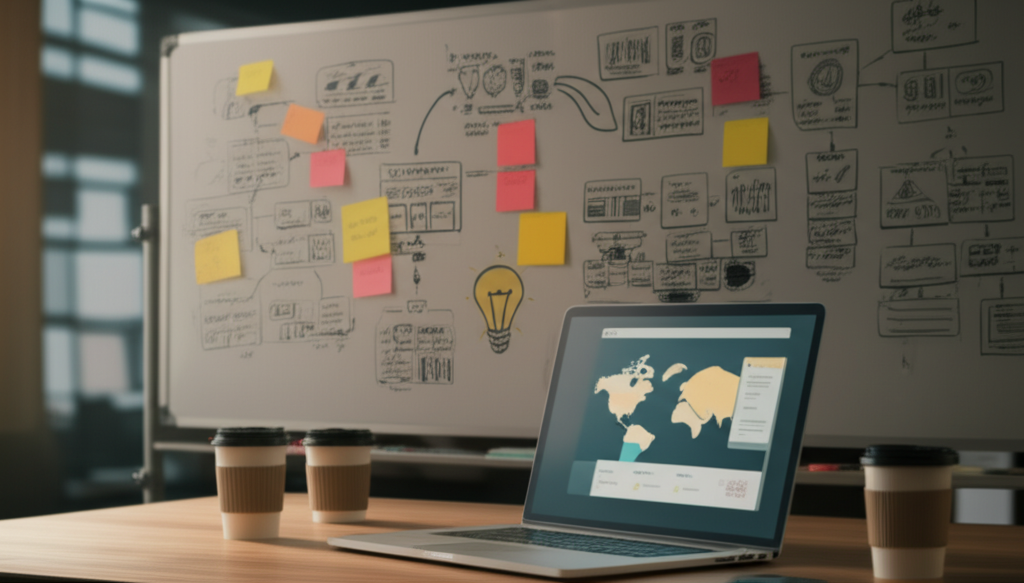
Last Tuesday, I had a meeting at 2:00 PM to pitch a feature idea. At 1:30 PM, I decided I should probably have a working demo instead of just slides.
By 2:00 PM, I did. Voice coding turned a 30-minute panic session into a functional prototype.
Is this responsible software development? Absolutely not. Did it close the deal? Absolutely yes.
The Prototype Paradox
Prototypes are supposed to be quick and dirty. But somewhere along the way, we forgot that. We spin up proper project structures. We configure linters. We debate naming conventions for code that might not exist next week.
By the time we've set up properly, the window for validation has passed. The stakeholder has moved on. The market has shifted. Someone else shipped.
Voice coding cuts through this. You speak what you want, fix the obvious issues, and ship. Done.
The 30-Minute Prototype Process
Here's exactly what I did for that 2 PM meeting:
1:30 PM - Define the demo
"I need a simple web page that shows a dashboard with three charts. One for daily active users, one for revenue, one for support tickets. Use placeholder data. It needs to look professional but doesn't need real data."
AI generates React component structure with Chart.js.
1:35 PM - Refine the layout
"Move the revenue chart to the top—that's what they'll care about most. Make the daily active users chart smaller. Add some subtle animations when the page loads."
AI adjusts layout and adds Framer Motion transitions.
1:42 PM - Add polish
"Can you add a header with a fake logo? And maybe some filters that don't actually work but look interactive?"
AI adds UI chrome that sells the concept.
1:50 PM - Fix the bugs
"The charts are overlapping on mobile. Fix the responsive layout."
AI corrects CSS.
1:55 PM - Deploy
vercel deploy—done in under a minute.
2:00 PM - Demo time
I walked in with a live URL. The stakeholder could click around, see the vision, and immediately understand what I was proposing. Way more compelling than slides.
Why Voice Makes This Possible
The key is removing friction from the idea-to-code translation. When you're typing, every typo breaks flow. Every forgotten import requires a context switch. Every decision about structure slows you down.
When you're speaking, you focus on what you want, not how to express it in syntax. The AI handles the translation. Your brain stays in creative mode.
For prototypes—where correctness matters less than speed—this is game-changing.
What Kind of Prototypes Work
Voice-powered prototyping works best for:
- UI demos - Showing visual concepts without real backend logic
- Proof-of-concepts - Demonstrating that something is technically possible
- Throwaway experiments - Testing assumptions before committing to build
- Client pitches - Selling an idea with something tangible
It works less well for:
- Complex algorithms - You need to think carefully, not speed-run
- Security-critical code - Fast = sloppy, and sloppy = vulnerable
- Production features - Prototypes are starting points, not endpoints
The Caveat You Knew Was Coming
Prototype code is not production code. I cannot stress this enough.
That 30-minute dashboard? It's held together with duct tape and optimism. The authentication doesn't work. The error handling is "hope nothing goes wrong." The accessibility is nonexistent.
Prototypes prove ideas. They don't ship to customers. The voice coding magic that lets you build fast is the same magic that lets you skip the things that make code robust.
Use this power responsibly. Build prototypes fast, validate them, then rebuild properly if they're worth pursuing.






Discussion
5 commentsJake Developer
2 days agoSarah M.
1 day agoLeave a Comment
Comments are moderated and may take a moment to appear.